Choosing a mould material can shape a product’s cost, quality, and launch schedule. Yet the decision is rarely as simple as choosing the cheaper option. In practical manufacturing, plastic and metal moulds behave differently under heat, pressure, and repeated use. A prototype shop may favour plastic for speed and easier machining. A high-volume factory may accept metal’s higher initial price for longer service life. What are the differences between plastic and metal moulds? This question deserves more than a basic cost comparison.
Plastic moulds often support quick design changes, lightweight handling, and shorter development cycles. They can suit prototypes, limited production runs, and parts with moderate dimensional demands. Metal moulds usually provide stronger wear resistance and better thermal stability. Steel or aluminium may also deliver more consistent results during repeated injection cycles. However, the best choice depends on material flow, part geometry, surface finish, tolerances, and expected production volume. Not always obvious.
Experienced engineers examine trial parts, cooling behaviour, cycle time, and maintenance records before recommending a mould. They also review supplier specifications instead of relying on assumptions. A mould that performs well in one workshop may fail under different temperatures or pressures. That matters. This comparison is not perfectly neat, and some decisions require compromise. A cheaper plastic mould may become expensive after frequent repairs. A durable metal mould may waste time during early design changes. Reliable planning combines measured data, realistic production targets, and honest evaluation of future risks.
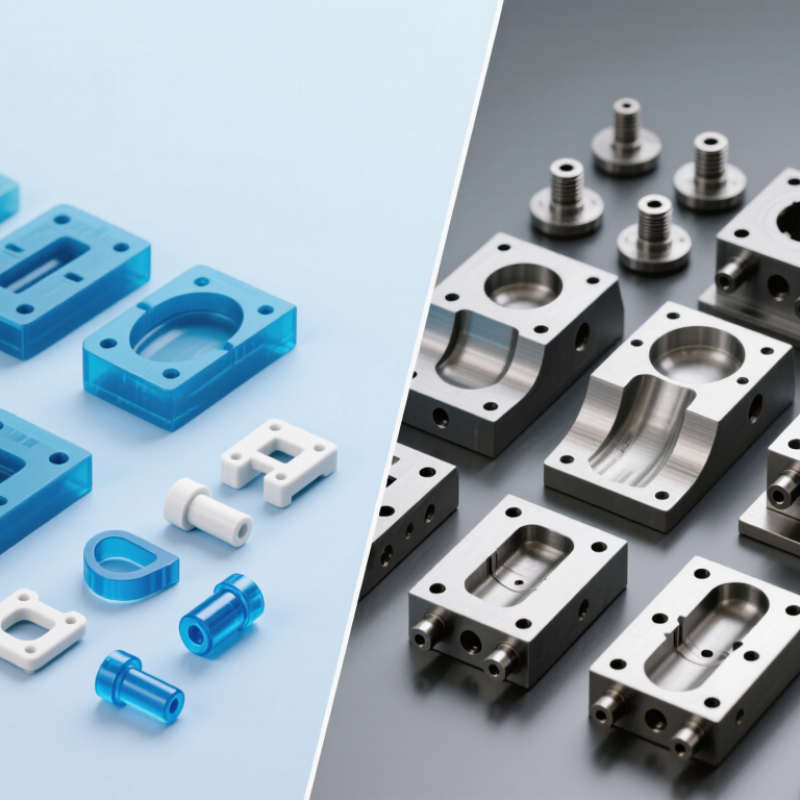
Plastic and metal moulds are tools that shape materials into repeatable forms. The term plastic mould can be confusing. It often means a mould used to produce plastic parts, rather than a mould made from plastic. These moulds may use steel, aluminium, silicone, or reinforced polymers. Metal moulds are usually made from hardened steel or aluminium. They guide molten material through cavities, then preserve the required shape during cooling.
In practical production, the mould material affects cost, accuracy, lifespan, and heat control. Steel moulds resist wear and pressure, making them suitable for thousands of cycles. Aluminium moulds are lighter and machine faster, but they may wear sooner. Polymer or silicone moulds work well for prototypes, short runs, and detailed surfaces. However, they can deform under heat or repeated force. A simple rule can mislead. The best choice depends on material temperature, part geometry, surface finish, and expected volume.
Tips: Confirm the mould’s working temperature before selecting its material. Inspect corners, vents, and ejector areas carefully. Small defects can leave visible marks on every part. Ask for sample parts when possible. Real testing often reveals problems that drawings miss. It is also wise to review maintenance access, because cleaning a complicated cavity can take longer than expected.
| Comparison Dimension | Plastic Moulds | Metal Moulds |
|---|---|---|
| Basic Definition | Moulds made from engineering plastics or polymer-based tooling materials, often used for prototypes, low-volume production, and selected forming processes. | Moulds machined or formed from metals such as tool steel, stainless steel, aluminium, or copper alloys. |
| Common Materials | Epoxy tooling board, polyurethane, nylon, PEEK, reinforced thermoplastics, and other engineering polymers. | Hardened or pre-hardened tool steel, stainless steel, aluminium, and copper-based alloys. |
| Initial Tooling Cost | Usually lower Lower material and machining costs can make plastic tooling economical for prototypes and short production runs. |
Usually higher Higher costs are associated with metal material, precision machining, heat treatment, polishing, and surface finishing. |
| Tooling Lead Time | Often shorter Plastic moulds can generally be machined or fabricated quickly, especially for simple geometries and prototypes. |
Often longer Lead time may increase because of heat treatment, EDM, polishing, coating, inspection, and complex machining requirements. |
| Service Life | Limited to moderate Wear, heat, pressure, and chemical exposure can reduce service life, particularly in demanding production environments. |
Moderate to very high Properly selected and maintained metals can withstand repeated cycles, high loads, and abrasive materials. |
| Dimensional Stability | Application-dependent Some plastics can absorb moisture or expand with temperature, which may affect dimensional accuracy. |
Generally high Metal moulds typically provide stable dimensions, although thermal expansion must still be considered during operation. |
| Heat Resistance | Limited to moderate Heat resistance depends strongly on the polymer; excessive temperature can cause softening, deformation, or degradation. |
High Metals are suitable for elevated-temperature processing when the alloy and mould design are appropriate. |
| Pressure and Load Capacity | Lower Plastic tooling is more vulnerable to deformation under high clamping forces or internal forming pressure. |
Higher Metal moulds are better suited to high-pressure injection, compression, die casting, and repeated mechanical loading. |
| Surface Finish | Can produce good surface finishes, but softer plastic surfaces may scratch or wear more quickly. | Can achieve highly polished, textured, coated, or chemically treated surfaces with strong long-term durability. |
| Heat Transfer | Generally slower Most plastics have lower thermal conductivity, which can lengthen cooling or heating cycles. |
Generally faster Metals usually transfer heat more efficiently, supporting faster and more consistent thermal control. |
| Weight | Lightweight Lower density makes handling, installation, and manual repositioning easier. |
Heavier Metal density increases mould weight, although aluminium can reduce weight compared with steel. |
| Corrosion Resistance | Naturally resistant Many polymers do not rust, although they may be affected by solvents, moisture, or process chemicals. |
Alloy-dependent Some metals require protective coatings, suitable storage, or corrosion-resistant grades to prevent rust and chemical attack. |
| Ease of Modification | Usually easy Plastic tooling can often be trimmed, bonded, filled, or re-machined with relatively simple equipment. |
Moderate to difficult Changes may require precision machining, welding, EDM, heat treatment, or re-polishing. |
| Typical Production Volume | Best suited to prototypes, samples, pilot runs, custom parts, and low-to-medium production volumes. | Best suited to medium-to-high production volumes, demanding processes, and applications requiring repeatable long-term performance. |
| Typical Applications | Prototype thermoforming, composite lay-up, vacuum forming, low-volume injection moulding, and development tooling. | High-volume injection moulding, die casting, compression moulding, metal forming, rubber moulding, and precision production tooling. |
| Maintenance Requirements | Usually simple to clean and repair, but damaged surfaces may require frequent refurbishment or replacement. | Requires regular cleaning, lubrication where applicable, inspection, polishing, and corrosion prevention. |
| Best Selection Criterion | Choose plastic moulds when speed, low initial cost, light weight, or rapid design changes are the main priorities. | Choose metal moulds when service life, heat resistance, pressure capability, dimensional stability, and production volume are the main priorities. |
Note: Actual performance depends on the specific material grade, mould design, processing temperature, pressure, surface treatment, maintenance practices, and production volume.
A plastic mould usually means a mould used to produce plastic parts. It may be made from steel, aluminium, silicone, or reinforced polymers.
Metal moulds commonly use hardened steel or aluminium. Steel handles pressure and wear better. Aluminium is lighter and faster to machine.
It suits prototypes, short production runs, and detailed surface designs. It can capture textures from a master pattern. Heat resistance may remain limited.
A master pattern is made by machining or printing. Silicone or polyurethane is poured around it. The material cures before the mould is removed.
Toolmakers machine metal blocks using milling, turning, drilling, and electrical discharge processes. They polish cavities and inspect dimensions carefully. Cooling channels may be machined inside.
Metal moulds usually last longer under repeated pressure and heating. Aluminium may support thousands of cycles. Hardened steel can exceed one million cycles in controlled conditions.
Plastic moulds usually require less initial tooling investment. They also support faster design changes. That advantage can disappear when production volume becomes high.
Choose based on expected quantity, not habit. A polymer mould may suit 500 parts. A metal mould may cost less per part at 50,000 units.
Confirm working temperature, wall thickness, cooling needs, and expected pressure. Inspect corners, vents, gates, and ejector areas. Small defects can mark every part.
Yes. Poor cooling, uneven shrinkage, and weak maintenance can shorten its life. Material choice alone does not guarantee performance. That assumption is easy to regret.
Plastic and metal moulds are essential tools for shaping materials, but they serve different production purposes. What are the differences between plastic and metal moulds? Plastic moulds are generally lightweight, easier to machine, and suitable for prototypes, low-volume production, and applications with moderate heat and pressure. Metal moulds are stronger, more heat-resistant, and better suited to demanding manufacturing environments. Their designs may also differ, as metal moulds can support more complex cooling systems, precise cavities, and repeated high-pressure use.
Manufacturing methods vary as well. Plastic moulds may be produced through machining, printing, or casting, while metal moulds are commonly made by CNC machining, electrical discharge machining, and heat treatment. Plastic moulds usually cost less and can be produced faster, but they may wear out sooner. Metal moulds require a higher initial investment yet typically provide greater accuracy, durability, and a longer service life. The best choice depends on production volume, material requirements, part complexity, budget, and expected operating conditions.

 Gemnexa CNC